
Equity benchmark indices Sensex and Nifty experienced a significant decline, primarily driven by a selloff in IT stocks due to concerns about AI disruption and renewed worries over global trade.

Indian stock markets recovered from early losses to close higher, driven by value buying in IT and banking shares and a rebound in the rupee.

A day after it received Rs 32,403 crore GST demand, Infosys on Thursday said Karnataka state authorities have withdrawn the 'pre-show cause' notice to the company and directed it to submit further response to the Directorate General of GST Intelligence (DGGI) on the issue. India's second largest IT company had made headlines on Wednesday after GST authorities slapped a Rs 32,403 crore notice on it for services availed by the company from its overseas branches for five years starting 2017.

Indian benchmark indices Sensex and Nifty experienced a sharp decline in early trading due to escalating tensions in the Middle East, driving crude oil prices higher. Global market bearishness and foreign fund outflows further contributed to investor unease.
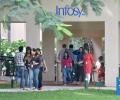
Infosys has received a tax demand of Rs 341 crore for assessment year 2020-21 from the Income Tax Department, the IT services company said on Monday adding it is evaluating filing an appeal against the said order. The Bengaluru-headquartered company said it is in the process of evaluating the impact of the order on its financial statements for the quarter and year ending March 31, 2024. Infosys also said it is evaluating filing an appeal against this order.

Stock markets closed higher for the second straight session on Tuesday, driven by gains in bank, IT and capital goods shares.
Indian markets on Dalal Street rallied sharply as easing tensions in the US-Iran conflict and stable oil prices boosted sentiment. Track Nifty 50 and BSE Sensex performance and key global triggers.

Market sentiment is likely to remain cautious as investors position themselves for the upcoming Union Budget and the US Fed's interest rate decision, where expectations are muted.

Indian equity markets closed higher, driven by gains in PSU bank, auto, and financial stocks, following the US Supreme Court's decision on tariffs. Sensex climbed 479.95 points to 83,294.66, and Nifty advanced 141.75 points to 25,713.

Indian stock market benchmark indices Sensex and Nifty experienced a significant decline, driven by escalating tensions in the Middle East and rising crude oil prices.
Benchmark BSE Sensex fell 558 points on Thursday amid heavy selling in IT shares, as concerns over AI-led disruptions and waning hopes of a Fed rate cut after firm US economic data weighed on investor sentiment.

Stock markets rebounded on Friday with the benchmark Sensex closing higher by 316 points after heavy buying in banking and metal shares amid optimism over trade deal progresses and India's participation in Pax Silica.

In an event-heavy week ahead, stock markets are expected to track Q3 corporate earnings from several blue-chip firms, including TCS and Infosys, while inflation data and global trends would also dictate investors' sentiment, analysts said.
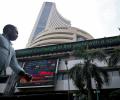
Benchmark stock indices Sensex and Nifty closed on a flat note in a choppy session on Wednesday as gains in PSU banks and auto shares were offset by losses in IT stocks.
Equity benchmark indices Sensex and Nifty rebounded sharply by nearly 1 per cent on Monday, driven by strong buying in power, banking, and financial stocks.
Benchmark equity indices Sensex and Nifty extended their gains for the third straight session on Wednesday, driven by last-hour buying in bank, metal, and FMCG shares.

Fears around artificial intelligence (AI) sparked a global selloff in information technology (IT) stocks, dragging down domestic software shares and prompting the heaviest foreign portfolio investor (FPI) outflows since the second half of July 2025.
The market capitalisation of BSE-listed companies eroded by Rs 9,40,581.75 crore to Rs 4,50,61,658.60 crore (USD 4.90 trillion) in a single day.

Among the Sensex constituents, Eternal, Trent, Bharti Airtel, Infosys, Tech Mahindra, UltraTech Cement, ICICI Bank, HDFC Bank, Bajaj Finance, Tata Consultancy Services, Bharat Electronics Ltd, Larsen & Toubro and Tata Motors Passenger Vehicles were the laggards. However, Tata Steel, Sun Pharmaceuticals, ITC, NTPC, Reliance Industries, HCL Technologies, PowerGrid, and Asian Paints were among the gainers.

Infosys Ltd on Thursday reported a 4.7 per cent rise in the September quarter net profit and raised revenue guidance after broadbased growth. Net profit of Rs 6,506 crore in July-September was up 4.7 per cent when compared to Rs 6,212 crore earnings in the same period last year. It was 2.2 per cent higher quarter-on-year, according to a company statement.
Among the Sensex constituents, Eternal, Tata Steel, Kotak Mahindra Bank, UltraTech Cement, Maruti Suzuki India, Sun Pharmaceuticals, Tech Mahindra, HDFC Bank, Tata Motors Passenger Vehicles, Infosys, Trent, Mahindra & Mahindra, Reliance Industries and HCL Technologies were the gainers. However, Asian Paints, Bharti Airtel, Bajaj Finance, PowerGrid, Axis Bank, ICICI Bank and Titan were among the laggards.

From the Sensex pack, Eternal, Bharat Electronics Ltd, Trent, Axis Bank, State Bank of India, Bajaj Finance, Sun Pharmaceuticals, Asian Paints, Adani Ports, Hindustan Unilever, Reliance Industries, ITC, PowerGrid, Tata Motors Ltd's Commercial Vehicles business, and Bajaj Finserv were the gainers. Infosys, Tata Motors Passenger Vehicles, Tata Steel, ICICI Bank, Tech Mahindra, Titan, UltraTech Cement, Maruti Suzuki India, and Larsen & Toubro were the laggards.

Stock market investors this week would track the renewed tariff tensions between the US and China, domestic inflation data, besides, quarterly earnings from blue-chips HCL Tech, Infosys and Reliance Industries would also drive the momentum in equities, analysts said.
From the Sensex pack, Asian Paints, ICICI Bank, PowerGrid, Larsen & Toubro, Bajaj Finserv, Bharti Airtel, Sun Pharmaceuticals, Maruti Suzuki India, Axis Bank, UltraTech Cement and HCL Technologies were the only gainers. On the other hand, Eternal, Tata Motors' commercial vehicles arm, Mahindra & Mahindra, Tata Steel, Bharat Electronics Ltd, Tata Motors Passenger Vehicles, Trent, Tata Consultancy Services, Hindustan Unilever, and Infosys were among the laggards.

US-based Schall Law Firm has said it will file a class action lawsuit against Infosys Ltd to recover losses suffered by investors in the wake of allegations of "unethical practices" at the Indian IT major. In October, Infosys had informed the stock exchanges of having received anonymous whistleblower complaints alleging certain unethical practices by the top management.
Leading exchange BSE on Wednesday asked Infosys to explain why it did not make a disclosure about a whistleblower complaint which alleged that the company's top executives were following "unethical practices" to shore up profits through irregular accounting ways.

From the Sensex firms, State Bank of India, Bajaj Finserv, Bajaj Finance, Maruti, HCL Tech, Larsen & Toubro, Mahindra & Mahindra and Infosys were among the major winners. However, Hindustan Unilever, Eternal, Tata Motors Passenger Vehicles, and Sun Pharma were among the laggards.
The government paid Rs 164.5 crore to Infosys to build the new income tax e-filing portal between January 2019 and June 2021, Parliament was informed on Monday. "The contract for Integrated e-filing & Centralized Processing Centre (CPC 2.0) Project was awarded through an open tender published on Central Public Procurement Portal (CPPP) to Infosys Ltd, the Managed Service Provider on the lowest cost basis.
Among the Sensex firms, Infosys, HCL Technologies, Bajaj Finance, Asian Paints, Tata Motors Passenger Vehicles, Tata Consultancy Services, Bharti Airtel, Titan, Bajaj Finserv, Reliance Industries and Larsen & Toubro were the gainers. Trent Ltd, Eternal, Power Grid, UltraTech Cement, Mahindra & Mahindra, Axis Bank, State Bank of India, Adani Ports, Hindustan Unilever and NTPC were the laggards.
Among the Sensex firms, Bharat Electronics Ltd, Mahindra & Mahindra, Adani Ports, HCL Technologies, Eternal, Infosys, Bharti Airtel, Sun Pharmaceuticals, Larsen & Toubro, Hindustan Unilever and UltraTech Cement were the gainers. Bajaj Finance, Tata Motors Passenger Vehicles, Kotak Mahindra Bank, PowerGrid and Tata Steel were among the laggards.

From the Sensex pack, Asian Paints, Tech Mahindra, Tata Consultancy Services, Bajaj Finserv, Adani Ports, HCL Technologies, Bharti Airtel, Infosys, Trent, Reliance Industries, UltraTech Cement, Sun Pharmaceuticals, Eternal, Titan and Bajaj Finance were the gainers. On the other hand, Tata Steel, Tata Motors Passenger Vehicles, Tata Motors Commercial Vehicles, Bharat Electronics, Kotak Mahindra Bank and PowerGrid were the laggards.

Facebook has a market capitalisation of around $29.7 billion and when the company went public its market value was about $104 billion.

Among Sensex firms, Bajaj Finserv, Bajaj Finance, Tata Steel, Reliance Industries, Sun Pharma, Tata Motors Passenger Vehicles, Axis Bank and Infosys were among the major gainers. Bharti Airtel and Asian Paints emerged as the laggards from the pack.

Infosys Ltd, India's No. 2 IT services exporter, forecast lower revenue growth than analysts had expected for this fiscal year, citing a challenging global economy, sending its shares tumbling nearly 18 percent.
Infosys Ltd forecast full-year sales growth that missed analyst expectations by a margin of up to 50 percent, dimming investor hopes that India's No.2 software services firm will soon start reaping the benefits of its strategic revamp.

IT stocks dropped in morning trade on Monday, with Tech Mahindra tumbling over 6 per cent, amid concerns over the steep hike in US H-1B visa fees. Shares of Tech Mahindra tumbled 6.45 per cent, LTI Mindtree slumped 5.61 per cent, Persistent Systems dropped 5.51 per cent, Hexaware Technologies tanked 5.14 per cent and HCL Tech fell by 4.24 per cent on the BSE.
Among Sensex firms, Tata Steel, HCL Tech, UltraTech Cement, Bharat Electronics, Sun Pharma and Tata Consultancy Services were the major gainers. However, Axis Bank, Titan, Maruti and Tata Motors were among the laggards.

Trading sentiment in the stock market this week will be guided by quarterly earning announcements from blue-chips such as Infosys and Bajaj Finance, the outcome of India-US trade talks and global cues, analysts said. Markets may on Monday react to the quarterly results of three heavyweights - Reliance Industries, HDFC Bank and ICICI Bank, an expert said.
Infosys openness backfires as missed guidance frustrates market.

Eight of the 10 most valued firms faced a combined erosion of Rs 1,17,493.78 crore in market valuation in an overall weak trend in equities last week, with Infosys taking the biggest hit. Reliance Industries, Tata Consultancy Services (TCS), HDFC Bank and ICICI Bank were among the eight companies that suffered a decline in their valuation. ITC and State Bank of India were the only gainers. Last week, the 30-share BSE Sensex fell by 775.94 points or 1.28 per cent.
